Aquarium Blog
Aquarium Quarantine Tank Canada: A Practical Setup and Care Guide
Oct
Whether you keep a small freshwater aquarium or a large tropical display, an aquarium quarantine tank in Canada is one of the most useful tools you can own. Quarantine separates new, stressed, or sick fish from an established aquarium while you monitor their condition and protect the main tank.
This setup does not need to be expensive or elaborate. In many cases, a simple bare-bottom aquarium with a sponge filter, heater, thermometer, and a few safe hiding places is enough. The important part is consistency: stable water, careful observation, and a clear plan for introducing fish to the display aquarium.
This guide explains how to choose equipment, prepare the tank, acclimate fish, identify common problems, and decide when quarantine is complete. It is designed for Canadian aquarists managing indoor freshwater and tropical aquariums throughout the year.
What Is an Aquarium Quarantine Tank?
A quarantine tank is a separate aquarium used to hold fish before they join a community or display tank. It can also be used as a hospital tank when an established fish needs closer observation or treatment.
Quarantine provides three major advantages:
- Disease control: Potential parasites, bacterial infections, and fungal problems can be identified before they spread.
- Stress reduction: New fish can recover from transport and adapt without competition from established tank mates.
- Safer treatment: Medication can be administered without exposing plants, invertebrates, beneficial bacteria, or unaffected fish.
A quarantine tank is not a replacement for good purchasing practices or proper water quality. It is an additional layer of protection that makes responsible fishkeeping easier.
How Large Should a Quarantine Tank Be?
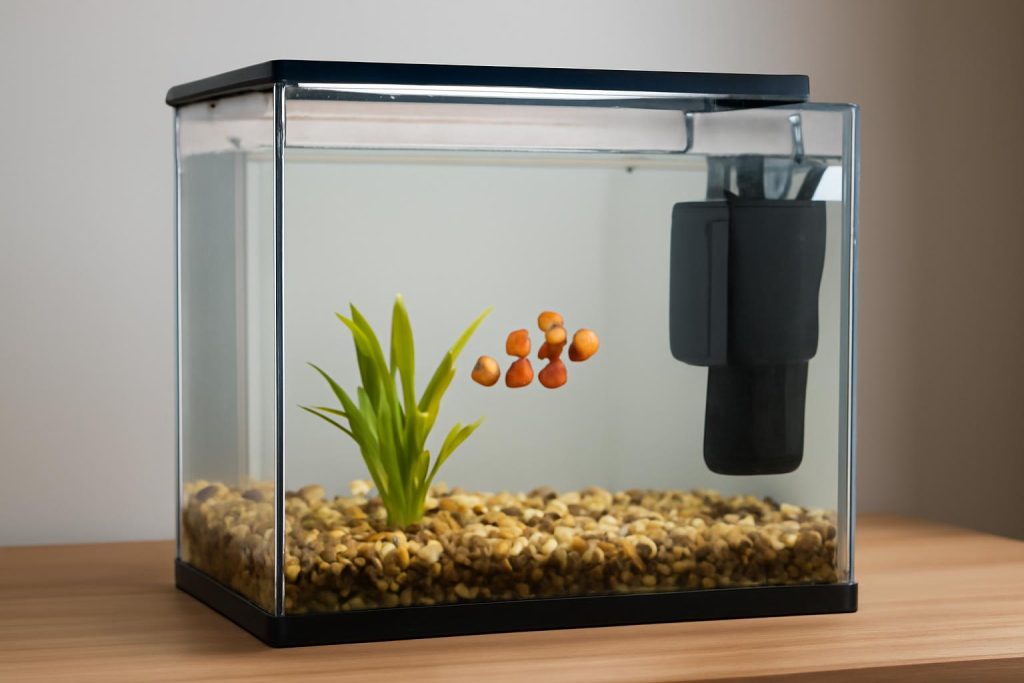
The right size depends on the fish, the number of fish being quarantined, and the expected quarantine period. For a single small fish, a 20- to 40-litre aquarium may be practical. A group of community fish may require a 75-litre tank or larger.
Choose a tank that gives the fish enough room to swim normally and allows you to maintain stable water parameters. Very small containers can experience rapid changes in temperature and ammonia, making them difficult to manage.
For most home aquarists, a medium-sized glass aquarium is a useful compromise. It is large enough for stable water conditions but still compact enough to store when not in use. If you are comparing equipment and tank options, the Canadian Aquarist online aquarium store is a convenient place to review aquarium products available to Canadian hobbyists.
Essential Equipment for an Aquarium Quarantine Tank in Canada
A quarantine aquarium does not need decorative equipment, but it does need dependable essentials. Select equipment that is appropriately sized for the tank and suitable for the species you keep.
1. Aquarium and secure cover
Use a clean aquarium that has never been exposed to soap, household cleaners, or chemicals. A secure cover is valuable because stressed fish may jump, particularly during the first few days after arrival.
Leave enough room for equipment cables and airline tubing while ensuring there are no gaps large enough for fish to escape. A simple cover also reduces evaporation and helps maintain a stable temperature.
2. Sponge filter and air pump
A sponge filter is often the best filtration choice for quarantine. It provides biological and mechanical filtration, creates gentle circulation, and is less likely to injure weak fish than a powerful intake.
Keep a spare sponge filter running in an established aquarium whenever possible. This allows you to transfer mature biological media to the quarantine tank when needed. If that is not possible, use a new sponge filter and test the water frequently while beneficial bacteria become established.
Air pumps are generally reliable, but Canadian aquarists should consider keeping spare airline tubing and a backup air pump. Equipment failures can happen at any time, and a quarantine tank should maintain oxygenation even if the primary filter stops working.
3. Aquarium heater and thermometer
Most tropical fish require stable warm water. Choose a heater with an adjustable thermostat and a suitable wattage for the aquarium volume. Add a separate thermometer so you can verify the actual temperature rather than relying only on the heater setting.
Indoor temperatures can vary significantly between Canadian seasons. A tank near a cold window, exterior wall, basement, or drafty doorway may cool quickly in winter. Keep the quarantine aquarium away from direct drafts and monitor temperature daily.
4. Bare bottom or simple substrate
A bare-bottom quarantine tank is usually easiest to maintain. Uneaten food and waste are visible, and siphoning can be completed quickly. This is particularly helpful when fish are producing excess waste or when you need to perform frequent water changes.
There are exceptions. Some bottom-dwelling fish feel more secure with a thin layer of smooth sand, while certain species benefit from a natural substrate during observation. Avoid sharp gravel, dusty materials, and anything that makes it difficult to inspect the tank.
5. Hiding places
Fish often arrive stressed and need shelter. Use inexpensive, easy-to-clean items such as ceramic caves, plastic pipes, or smooth aquarium decorations. Avoid porous wood, complex ornaments, and live plants if they could interfere with treatment or make cleaning difficult.
Arrange hiding places so you can still see the fish. Observation is one of the primary purposes of quarantine, so the tank should not be so heavily decorated that symptoms remain hidden.
6. Water conditioner and test kits
Keep a reliable water conditioner available for every water change. You should also be able to test ammonia, nitrite, nitrate, pH, and temperature. Depending on the fish species and local water supply, hardness testing may also be useful.
Canadian tap water differs from one municipality to another. Do not assume that water from a different city, supplier, or private well will have the same chemistry as your established aquarium. Test replacement water and use the same preparation process each time.
How to Prepare the Quarantine Tank
Set up the tank before the fish arrive. This gives you time to check for leaks, verify the heater, and confirm that the filter is producing adequate circulation.
- Place the aquarium on a level, stable surface away from drafts and direct sunlight.
- Add conditioned water that is close to the expected temperature and chemistry.
- Install the sponge filter, air pump, heater, thermometer, and cover.
- Add one or two simple hiding places.
- Confirm that ammonia and nitrite are zero before adding fish.
- Prepare a siphon, dedicated bucket, net, and test supplies for quarantine use.
Ideally, the quarantine filter should be biologically mature. If the tank must be started quickly, transfer established sponge media from a healthy aquarium and test ammonia and nitrite every day. Do not rely on a bottled product as the only evidence that a new filter is ready.
Use separate equipment for the quarantine tank whenever possible. Nets, hoses, algae scrapers, and buckets can transfer pathogens between aquariums. Labeling quarantine equipment helps prevent accidental cross-contamination.
How to Acclimate New Fish
Acclimation should be calm and controlled. Dim the aquarium lights and avoid sudden movement around the tank. If the fish arrived in a bag, float the unopened bag briefly to reduce the temperature difference, then gradually mix small amounts of quarantine water into the transport water.
The exact method depends on the species and shipping conditions. Fish that have been in transport for many hours may be stressed by prolonged exposure to accumulating waste in the bag, so acclimation should not be unnecessarily extended.
Whenever possible, transfer the fish with a net rather than pouring transport water into the aquarium. Discard the transport water. Keep the lights low for the first several hours and avoid feeding immediately if the fish appear exhausted.
How Long Should Fish Stay in Quarantine?
A practical quarantine period is commonly two to four weeks, although the appropriate duration depends on the fish, its condition, and your risk tolerance. Fish with visible symptoms, a history of poor transport, or uncertain origins may require longer observation.
During quarantine, look for:
- White spots, excess mucus, ulcers, or unusual patches
- Clamped fins, rapid breathing, flashing, or persistent scratching
- Loss of appetite, weight loss, bloating, or abnormal waste
- Swimming difficulty, isolation, or aggression
- Signs of external parasites or fungal growth
Do not move fish to the display aquarium simply because they look better after a few days. Some conditions are intermittent, and a fish may appear normal while still carrying a problem. Continue observing feeding response, respiration, body condition, and waste production.
Water Changes and Daily Quarantine Care
Quarantine tanks often need more frequent maintenance than mature display aquariums. Bare bottoms make it easy to remove waste, but the absence of established substrate means the biological filter may have less support.
Test ammonia and nitrite daily when the quarantine tank is new, heavily stocked, or undergoing treatment. Perform a partial water change whenever either parameter is detectable. Match the temperature of the replacement water and add conditioner according to the product instructions.
Feed small portions and remove uneaten food. Overfeeding is one of the fastest ways to create an ammonia problem in a quarantine tank. A healthy fish can tolerate modest feeding during a short observation period, while excess food can compromise water quality within hours.
Record test results and observations in a notebook or phone. Note feeding, behaviour, water changes, medication, and symptoms. Written records help you identify gradual changes that might otherwise be overlooked.
Medication and Treatment Considerations
A quarantine tank gives you the option to treat fish separately, but medication should not be added automatically. Different diseases require different approaches, and some medications can harm sensitive species, invertebrates, plants, or biological filtration.
Before treatment, identify the symptoms as carefully as possible and read the full product label. Remove chemical filtration media if the instructions require it, increase aeration when appropriate, and avoid combining products unless the manufacturer or a qualified aquatic professional confirms that the combination is safe.
Never use household cleaners, human medications, or improvised chemicals in an aquarium. If fish are deteriorating rapidly, seek advice from an experienced aquatic retailer or aquatic veterinarian where available.
When shopping for a quarantine setup, it can be helpful to review the broader aquarium product selection and compare filtration, heating, and maintenance equipment before an emergency occurs.
When Can Fish Move to the Display Aquarium?
Fish can be considered for transfer when they have completed the observation period without symptoms, are eating consistently, and show normal activity and respiration. Confirm that the display aquarium has stable temperature and water parameters before moving them.
Use a clean net or container that has not been used with untreated or sick fish. Avoid transferring quarantine water into the display aquarium. If the fish has received medication, follow the product instructions regarding treatment completion and water changes before transfer.
Do not rush the process because the quarantine tank is inconvenient. A few additional days of observation are usually less risky than introducing a problem into an established aquarium with plants, invertebrates, and other fish.
Common Quarantine Mistakes to Avoid
Using an uncycled tank without testing
A new aquarium can become unsafe quickly. If you must use an uncycled tank, test frequently and be prepared for partial water changes.
Sharing equipment between tanks
Shared nets and hoses can spread pathogens. Keep quarantine tools separate and disinfect them appropriately between uses.
Adding too many fish
Overcrowding increases stress, waste, and disease transmission. Quarantine compatible fish in manageable groups and use a larger tank when necessary.
Ignoring temperature stability
Temperature swings are particularly problematic for stressed tropical fish. Position the aquarium carefully and check the thermometer every day.
Moving fish after only visual inspection
Some problems are not obvious immediately. Monitor feeding and behaviour throughout the full quarantine period rather than relying on appearance alone.
Frequently Asked Questions
Can I use a storage tote as an aquarium quarantine tank?
A clean, food-safe storage tote may work temporarily if it is large enough, chemically safe, and supported properly. However, a glass aquarium is easier to inspect, heat, cover, and clean. Avoid containers that have held chemicals or strong fragrances.
Does a quarantine tank need an aquarium light?
No. A basic room light or low-intensity aquarium light is usually sufficient. Limiting bright lighting can reduce stress and make some symptoms easier to observe. If you keep live plants in quarantine, choose lighting based on their needs.
Should I add aquarium salt during quarantine?
Not automatically. Salt can be useful in certain situations and for selected freshwater species, but it is not suitable for every fish, plant, or treatment plan. Research the species and follow a carefully chosen treatment protocol.
Can I quarantine fish in the main aquarium with a divider?
A divider is not a true quarantine system because water is shared. Pathogens can still move between sections, and treatment may affect every inhabitant. A separate aquarium is safer and more effective.
Where can I find more aquarium setup information?
For additional product categories and general aquarium resources, review the Canadian Aquarist aquarium categories. Choose equipment according to your fish species, aquarium volume, and maintenance routine rather than buying the largest or most advanced item automatically.
Final Thoughts
A quarantine tank is a practical investment for any serious indoor aquarium keeper. It protects established fish, simplifies treatment, and gives new arrivals time to recover from transport and adapt to their new environment.
The most effective setup is not necessarily the most expensive. A stable aquarium, gentle filtration, dependable heating, clean equipment, regular testing, and patient observation provide the foundation. For Canadian aquarists dealing with seasonal temperature changes and long-distance fish shipping, preparation is especially valuable.
Set up the quarantine system before you need it, keep the equipment maintained, and use a written observation routine. That small amount of planning can prevent a single new fish from becoming a serious problem for the entire aquarium.
