
Zoanthus Dragon Eye: A Practical Care Guide for Canadian Reef Keepers
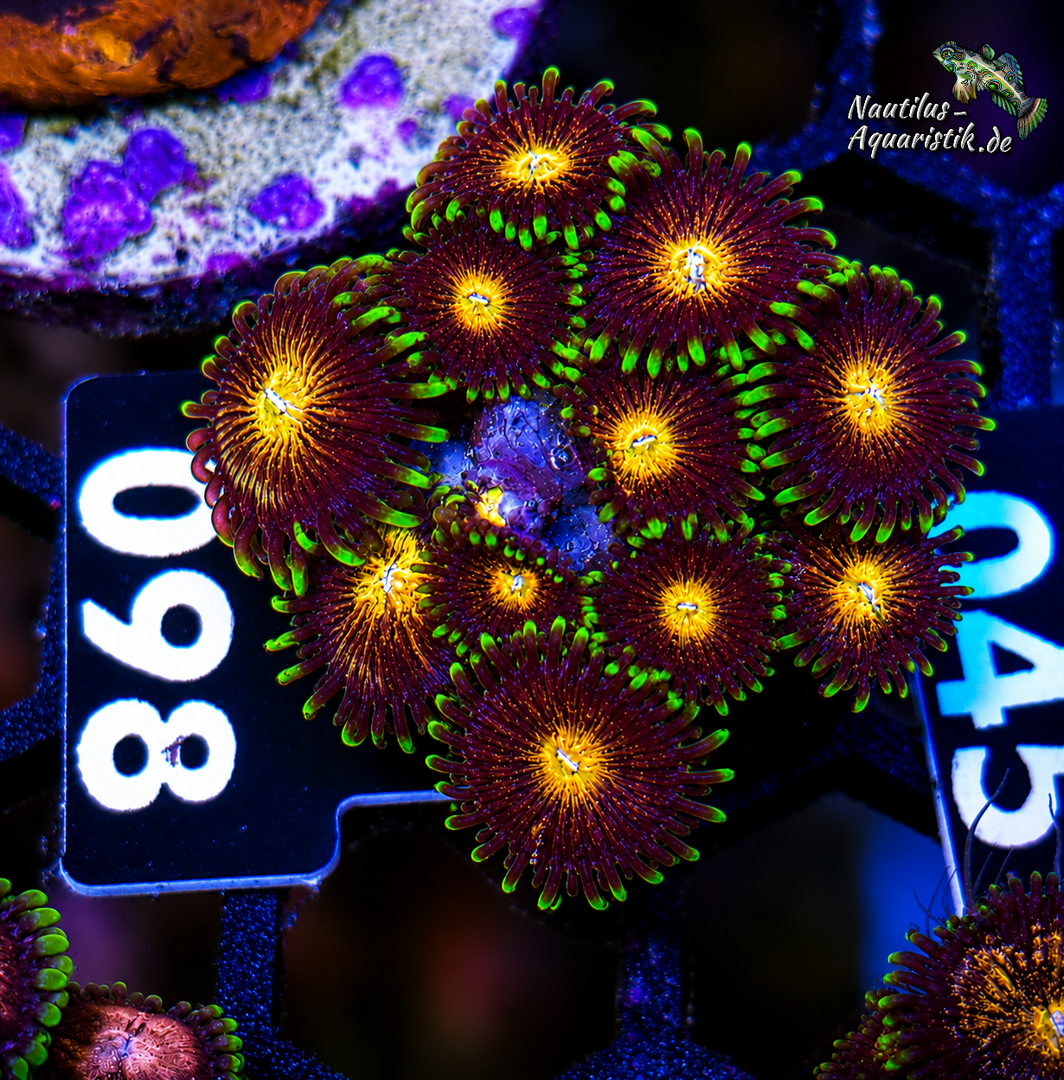
Zoanthus Dragon Eye is a widely available zoanthid morph prized for its deep green fringe and bright, pupil-like center. For reef keepers in Canada, it offers an affordable way to add movement and colour to a nano or mixed reef without demanding demanding lighting or a large footprint. This guide explains what the morph is, how to care for it, how to buy it safely, and how it fits into a Canadian aquarium setup.
What Is a Zoanthus Dragon Eye?
Dragon Eye zoas belong to the genus Zoanthus, a group of colonial soft corals that form mats of connected polyps. Each polyp has a short column topped by a crown of tentacles that surrounds a central oral disc. On the Dragon Eye morph, that disc typically shows a vivid green or yellow-green iris with a darker center, ringed by brownish or olive skirt tentacles.
Colour can shift with lighting, water chemistry, and the angle of view. Many vendors sell frags as “Dragon Eye zoanthids,” and the name has been applied to several similar colour forms over the years, so judging a frag by its photo and asking about lineage is worthwhile.
Zoanthid or Palythoa?
Dragon Eyes are true Zoanthus, not Palythoa. They usually have smaller polyps and thinner, mat-forming tissue. This distinction matters for handling safety, because palythoas and some zoanthids carry palytoxin, a potent compound that can be harmful if it enters the eyes or an open cut.
Zoanthus Dragon Eye Care Requirements
These corals suit beginners and intermediate reefers because they tolerate a range of conditions. Stable parameters matter more than chasing exact numbers.
Lighting and Placement
Moderate lighting of roughly 100–150 PAR works well, though the coral will adapt to brighter or dimmer spots. Place frags low to mid-tank at first, then move them upward over a few weeks if colours dull. Strong light can bleach the iris, while too little light causes polyps to stretch toward the source.
Water Flow
Aim for gentle to moderate, indirect flow. Direct blasts from a wavemaker can keep polyps closed and invite algae between them. Random flow from a return pump plus a small powerhead is usually enough in a Canadian nano or mid-size system.
Water Parameters
Keep salinity near 1.025 specific gravity and temperature around 24–26 °C. Maintain alkalinity in a stable range, typically 7–9 dKH, with calcium and magnesium at reef-normal levels. Consistently stable readings outperform a perfect single test result.
Feeding and Growth
Dragon Eyes gain most energy from light through their symbiotic algae, but they accept small meaty foods such as baby brine shrimp or powdered coral food. Feed sparingly, since heavy feeding can foul water in smaller tanks. Under good conditions, colonies spread across rock and can be fragged with a sharp blade once they cover a few centimetres.
Buying Dragon Eyes in the Canadian Context
Canada’s climate makes indoor reef keeping appealing year-round, and the market reflects that. Local fish stores, reef clubs, and online retailers across provinces sell zoa frags, and the best listings include clear photos, honest colour notes, and shipping details. When you browse aquarium livestock and dry goods from a Canadian seller, confirm they ship with heat or cold packs suited to your season and province. Winter shipping from Ontario to the Prairies, for example, needs insulation that a local pickup avoids.
Quarantine new frags for several weeks before adding them to a display. Zoanthids can carry pests such as nudibranchs, spiders, and algae, and a separate observation tank lets you dip and inspect safely.
Sourcing From Reputable Sellers
Ask whether the frag was aquacultured, which is generally hardier than wild-collected stock. Request a photo of the actual piece rather than a stock image. If you plan to set up a new tank for your zoas, choose equipment sized to your space and budget, then cycle it fully before adding livestock.
Handling Safety and Health
Wear gloves and eye protection when fragging or gluing zoanthids. Keep children and pets away, wash hands thoroughly, and never touch your face mid-task. If a frag is damaged in transit, isolate it and dispose of any loose tissue responsibly.
How Dragon Eyes Fit Into a Canadian Reef Community
Dragon Eyes work well as low-growing accents among other soft corals, LPS, and peaceful fish. Avoid placing them where aggressive corals can reach them, and give them their own rock island if you want to control spreading. Keep an eye on tank-mates that nip at polyps, and choose species compatible with your aquarium setup in Canada before adding more livestock. A stable, well-scaped system gives these zoas room to form a colourful colony over time.
Tank Sizing and Equipment Notes
A 40–80 litre system suits a small zoa garden, while larger tanks allow bigger colonies and more fish options. Prioritise a reliable heater, a suitable light, and a protein skimmer or regular water changes for nutrient control. Canadian homes vary widely in winter humidity and room temperature, so keep heating consistent and avoid placing tanks near drafty windows.
Common Mistakes to Avoid
Over-lighting new frags, skipping quarantine, and letting algae smother polyps are the most frequent problems. Avoid gluing a frag to a spot you cannot reach, since future fragging gets harder. Skip heavy dosing until you have reliable test results, and resist adding many zoas at once before you understand how they behave in your system.
FAQ
Are Zoanthus Dragon Eyes good for beginners?
Yes, they are among the more forgiving zoanthids if lighting, flow, and water chemistry stay stable. Beginners should still quarantine new frags and wear gloves when handling them.
How fast do Dragon Eye zoas grow?
Growth depends on lighting, feeding, and water quality. Many colonies add a few polyps per month under good conditions, while stressed frags may sit closed for weeks.
Can I keep Dragon Eyes in a nano tank?
They suit nano tanks well because they need modest space and tolerate moderate light. Keep flow gentle and control nutrients to prevent algae between polyps.
What lighting do Dragon Eye zoanthids need?
Moderate reef lighting is usually enough. Start low and raise intensity gradually to bring out colour without bleaching the polyps.
Are Dragon Eyes safe to handle?
They carry palytoxin risk like many zoanthids. Wear gloves and eye protection, avoid touching your face, and keep frags away from children and pets.
Be the first to review “Zoanthus Dragon Eye”
Related products


Newest Products


Newest Products
Newest Products
Newest Products
Newest Products
Newest Products
Newest Products
Reviews
There are no reviews yet.