
Xanthichthys auromarginatus: A Practical Guide to the Gilded Triggerfish (7–10 cm)
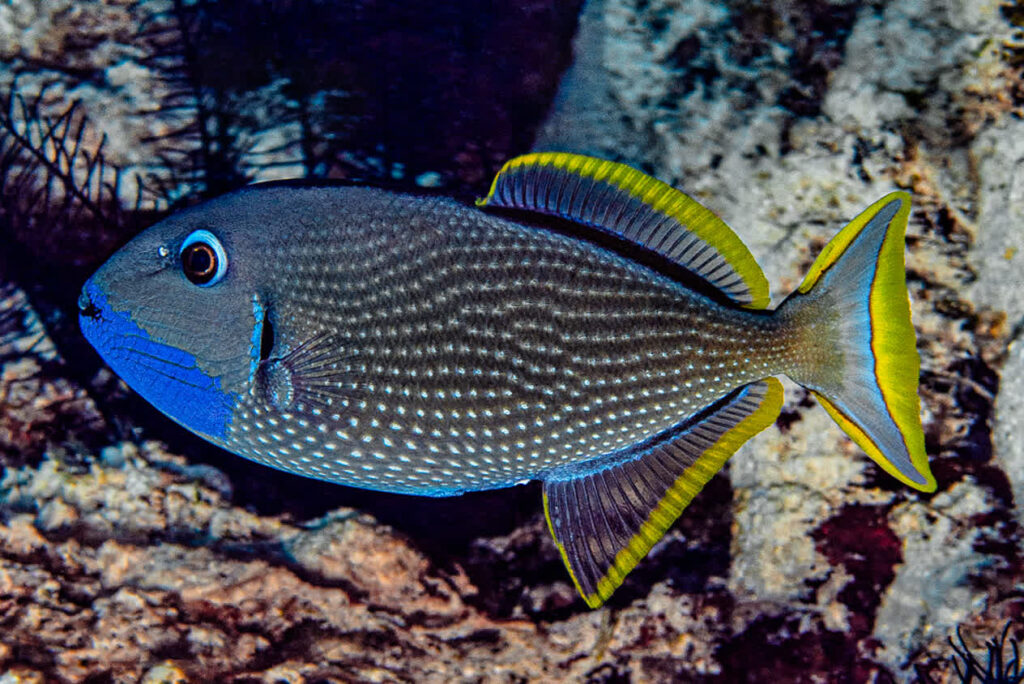
Xanthichthys auromarginatus, commonly called the gilded triggerfish, is a striking marine species known for its blue-grey body and shimmering yellow edging on the fins, tail, and face. Small juvenile and sub-adult specimens around 7–10 cm are the ones most often offered to hobbyists, which makes understanding their needs, temperament, and tank requirements essential before buying. This guide covers identification, care, tank setup, feeding, and what Canadian reef keepers should plan for when sourcing one.
What Is the Gilded Triggerfish?
The gilded triggerfish belongs to the family Balistidae, a group of robust, intelligent marine fish with a distinctive trigger-like dorsal spine. Xanthichthys auromarginatus is a plankton-feeding triggerfish rather than a coral-crunching one, which makes it more reef-compatible than many of its relatives.
Adults are typically blue-grey with yellow trim along the margins of the dorsal, anal, and caudal fins, and males often develop more elaborate colouring and patterning than females. The 7–10 cm size range covers juveniles and young sub-adults; these fish can grow considerably larger over time, so plan for the adult size rather than the fish in front of you.
Natural Habitat and Behaviour
This species occurs in the Indo-Pacific, generally around outer reef slopes and drop-offs where currents carry plankton. In the wild it swims in open water, picking food out of the current rather than hunting the substrate. That behaviour carries over into captivity: expect an active, mid-water swimmer that appreciates open space and steady flow.
Are Gilded Triggerfish Suitable for Your Aquarium?
They suit intermediate to advanced marine hobbyists who can provide a large, stable system with good filtration and peaceful-to-moderately-aggressive tankmates. Beginners should generally gain experience with hardier species first, because triggerfish reward consistent water quality and careful stocking.
Temperament and Tankmate Compatibility
Gilded triggers are generally less aggressive than many triggerfish, but they are still assertive feeders with strong jaws and a tendency to nip at slow-moving or long-finned fish. Avoid housing them with tiny, timid species, seahorses, or delicate invertebrates. Larger, fast-swimming fish and robust reef inhabitants are safer companions.
Reef Safety and Invertebrate Risk
Because Xanthichthys auromarginatus feeds mainly on zooplankton in the wild, it is often described as relatively reef-safe compared with other triggers. That said, individual fish vary, and small shrimp or ornamental crustaceans may be at risk. Treat reef compatibility as “often, but not guaranteed.”
Setting Up a Tank for a 7–10 cm Specimen
Plan for a tank that suits the adult fish, not just the juvenile. A minimum of roughly 450–600 litres is a reasonable target for an active triggerfish, with larger volumes preferable for long-term health and for keeping aggression in check.
Tank Size, Flow, and Aquascaping
Provide open swimming room in the middle and upper water column, plus live rock or similar structure for territory and grazing. Moderate to strong, well-distributed flow mimics the current-rich reef slopes this fish favours. Secure any rockwork, since triggerfish can rearrange loose pieces.
Water Parameters and Filtration
Aim for stable, marine-standard conditions: a specific gravity around 1.023–1.025, temperature in the mid-20s Celsius, and consistently low ammonia and nitrite. Strong protein skimming and reliable biological filtration matter, because this is a fish with a healthy appetite and corresponding waste output. Follow established marine aquarium guidance for cycling and quarantine before adding any specimen.
Feeding the Gilded Triggerfish
This species is a plankton feeder, so offer a varied diet of meaty foods in small, frequent portions. Good options include enriched frozen foods such as mysis and krill, chopped seafood, and high-quality pelleted food formulated for marine carnivores.
Feed two to three small meals daily rather than one large one, which suits its grazing, current-feeding habit. Observe body condition closely: a thin triggerfish usually signals underfeeding or competition at feeding time.
Buying Guide for Canadian Hobbyists
The market for aquariums in Canada ranges from small local stores to online retailers, and availability of a specific species like Xanthichthys auromarginatus varies. Ask whether a fish is captive-conditioned, what it is currently eating, and how long the seller has held it—answers to those questions tell you more than a listing photo.
The same approach applies whether you buy fish for your aquarium online or in person: confirm size, source, and health, and arrange shipping during suitable weather. Canadian winters make livestock shipping riskier, so time purchases carefully and verify heat or cold packs and delivery timing. If you plan to buy fish tanks online in Canada, size the system for the adult triggerfish from the outset.
Sizing and Price Reality
Small specimens are attractive partly because they are less expensive and easier to house initially, but the tank, filtration, and running costs dwarf the fish itself. Budget for a system that will still work when the fish is fully grown.
Key Facts at a Glance
- Species: Xanthichthys auromarginatus (gilded triggerfish)
- Family: Balistidae
- Typical size in trade: 7–10 cm (juveniles and sub-adults)
- Diet: Planktonic carnivore; frozen and pelleted meaty foods
- Temperament: Assertive but comparatively mild for a triggerfish
- Minimum tank: Roughly 450–600 litres, larger preferred
- Reef suitability: Often kept in reefs; invertebrate risk varies by specimen
- Best for: Intermediate to advanced marine hobbyists
Limitations and Things to Weigh
The gilded triggerfish is not a beginner’s first marine fish, and no article can guarantee individual temperament or reef safety. Its size potential, appetite, and occasional nipping behaviour mean you need a long-term plan, not just a suitable tank today. Quarantine new arrivals to protect both the triggerfish and existing livestock.
Frequently Asked Questions
How big does Xanthichthys auromarginatus grow?
This species grows well beyond the 7–10 cm specimens usually sold, so plan for a substantially larger adult.
Is the gilded triggerfish reef safe?
It is often considered relatively reef-safe because it feeds on plankton, but individuals may nip at corals or small invertebrates. Monitor closely.
What does a gilded triggerfish eat?
Primarily meaty, plankton-type foods: enriched frozen mysis and krill, chopped seafood, and marine carnivore pellets.
Can I keep more than one?
Keeping multiples is generally not recommended in home aquariums because of territorial behaviour.
What tank size suits a 7–10 cm specimen?
Start with a system sized for the adult—roughly 450–600 litres or more—with strong flow and open swimming space.
Be the first to review “Xanthichthys auromarginatus (Gilded triggerfish ca 7-10cm)”
Related products

Newest Products


Newest Products

Newest Products

Newest Products


Newest Products
Newest Products
Newest Products
Reviews
There are no reviews yet.