
Buy Sleeper Blue Dot Goby in Canada: A Practical Care and Buying Guide
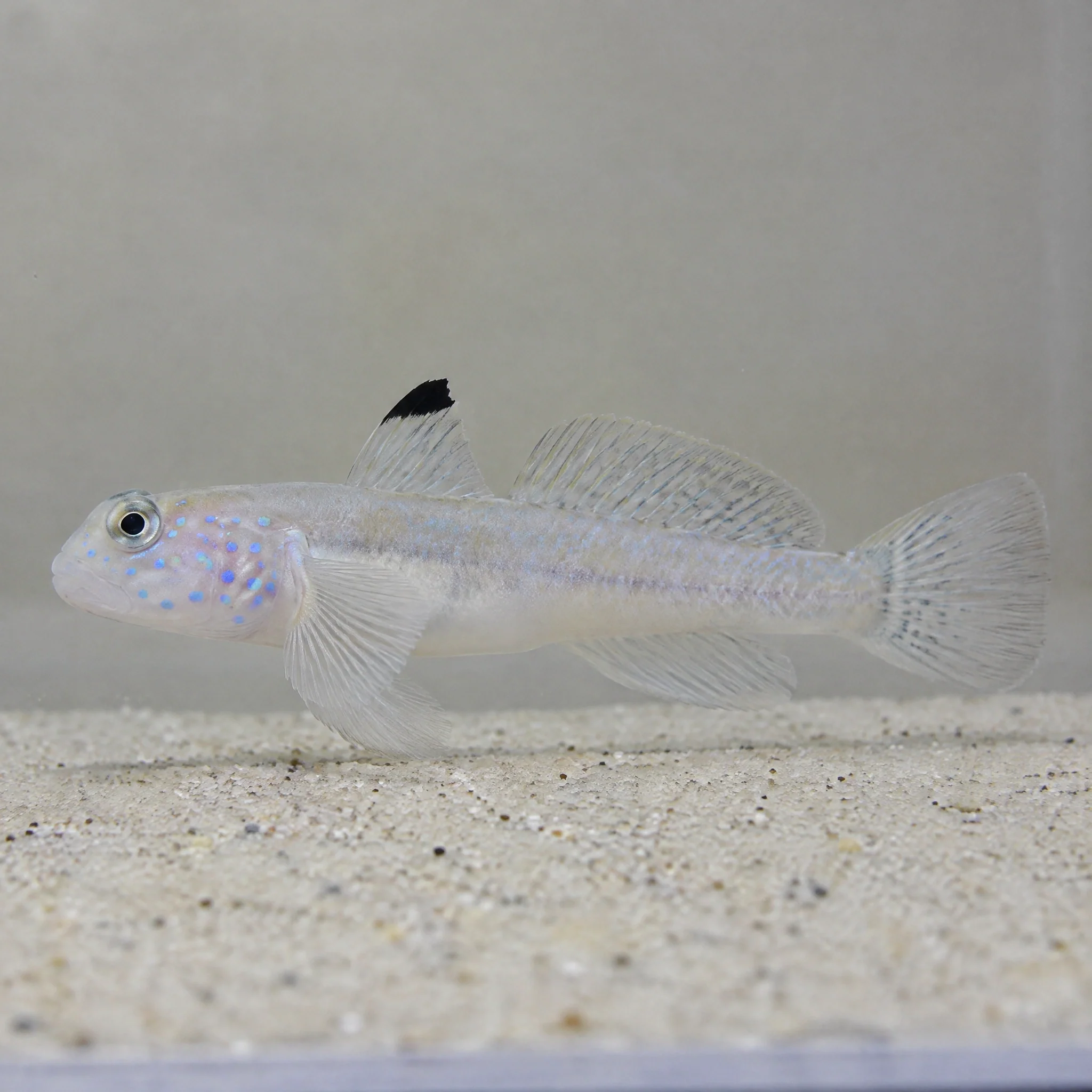
Sleeper blue dot gobies (Valenciennea sexguttata) are one of the most useful fish you can add to a marine aquarium—and one of the most misunderstood. If you’re looking to buy Sleeper blue dot goby in Canada, this guide covers what the fish actually needs, how to choose a healthy specimen, and how it fits into a Canadian reef setup. You’ll also find practical buying tips, tank requirements, and feeding advice so the fish settles in well.
Also called the sixspot sleeper goby or blue-spotted goby, this species is a sand-sifting fish from Indo-Pacific reefs. Its job is simple: it keeps the substrate turned over and clean. Its needs, however, are not always simple, and many new keepers underestimate them.
What Is the Sleeper Blue Dot Goby?
The sleeper blue dot goby is a small bottom-dwelling marine fish with a pale body, faint blue spots, and a habit of hovering just above the sand. It belongs to the family Gobiidae, which is the largest family of marine fish. In the wild, it lives over sandy and rubble areas where it sifts mouthfuls of sediment to extract tiny invertebrates.
Unlike many gobies that perch on rocks, sleeper gobies spend most of their time close to the substrate. They are generally peaceful toward other fish and are considered reef-safe, since they don’t nip corals. That combination—peaceful, useful, and visually subtle—makes them popular in community reef tanks.
Why Keep a Sleeper Blue Dot Goby?
The main appeal is biological housekeeping. As the fish sifts sand, it helps prevent debris from accumulating and keeps the bed oxygenated. Many aquarists treat a sleeper goby as part of their clean-up crew rather than as a showpiece fish.
There are trade-offs, though. These gobies can be finicky eaters when newly imported, and they need a mature sand bed to forage in. They also don’t suit every tank—more on that below. Understanding these limitations before you buy saves stress for both you and the fish.
If you’re still shaping your setup, browsing marine aquarium guidance and livestock resources can help you plan a tank that suits sand-sifting species.
Tank Requirements in Canada
Because the fish is tropical marine, your setup needs to hold stable warm saltwater. Most Canadian reef keepers aim for a temperature around 24–26 °C (75–79 °F), a specific gravity near 1.020–1.025, and a pH around 8.1–8.4. These are standard marine parameters, but stability matters more than chasing exact numbers.
Minimum Tank Size and Substrate
A single sleeper blue dot goby generally does best in a tank of at least 30 gallons (roughly 115 litres) with a reasonably deep sand bed. Fine sand is preferable to coarse gravel because the fish sifts it and passes it through its gills. A shallow, coarse bed offers little to forage in and can stress the fish.
Tank Mates and Reef Compatibility
These gobies are peaceful and can be kept with most community reef fish, though very aggressive tank mates may outcompete them for food. Avoid keeping two sleeper gobies together unless you have a large tank, as they can be territorial with their own kind. Invertebrates such as cleaner shrimp and snails are generally ignored.
If you keep larger, boisterous species, think carefully about compatibility before adding a quiet sand-sifter. Enthusiasts who keep larger predatory or “monster” fish often run tanks that are too rough for sleeper gobies, so match the fish to the community.
Feeding a Sleeper Blue Dot Goby
Feeding is where many new owners run into trouble. In the wild, sleeper gobies get most of their nutrition from tiny invertebrates in the sand. In captivity, they often ignore prepared foods at first and may slowly lose condition if they don’t adapt.
Offer small meaty foods such as frozen brine shrimp, mysis, and finely chopped seafood. Some individuals take pellets or flake, but don’t assume it. Watch the fish’s body shape: a healthy goby is rounded, not pinched behind the head. If yours won’t feed after a week or two, try live or freshly thawed foods and target-feed near its resting spot.
A mature, biologically active sand bed helps, but it isn’t a substitute for deliberate feeding. Plan to feed small amounts two or three times a day while the fish is settling in.
How to Buy Sleeper Blue Dot Goby in Canada
Buying locally gives you the chance to see the fish first. Buying online widens your options, especially if your local store doesn’t stock the species. Both routes work if you vet the seller.
Buying From a Local Store
Ask to see the goby feed before purchase—this is the single most useful check. Look for a fish with clear eyes, full body, steady hovering movement, and no white spots or ragged fins. Confirm the store holds livestock in properly maintained marine systems, not mixed with incompatible species.
Buying Online Within Canada
Online livestock sales require careful shipping, so ask the seller about delivery methods and heat or cold packs, especially in Canadian winters. Confirm the fish is quarantined or at least observed before shipping. Reputable sellers will discuss arrival guarantees and acclimation steps.
Before ordering, sort out your setup. If you need to buy fish tanks in Canada or upgrade an existing one, do it before the fish arrives so you’re not rushing a cycle. Ordering livestock and equipment at the same time usually means the fish arrives before the tank is ready.
Quarantine and Acclimation
Quarantine a new goby in a separate observation tank where practical, then acclimatise slowly using drip or float-and-add methods. Marine fish handle shipping stress poorly, so a calm, dim tank and a slow introduction improve the odds considerably.
Costs and Practical Considerations in Canada
Livestock prices vary by supplier and season, so expect to compare several sellers rather than rely on a single figure. Beyond the fish itself, budget for salt mix, test kits, food, and possibly a larger sand bed. Marine setups cost more to run than freshwater ones, and a sleeper goby is a small addition to an already significant investment.
Also consider sourcing aquarium products locally where possible. Shipping live food and marine supplies across Canada can be slow in winter, so keeping aquarium products for Canadian reef keepers available nearby reduces headaches.
FAQ
Is the sleeper blue dot goby reef-safe?
Yes, it’s generally considered reef-safe because it doesn’t eat corals. It does sift sand, which can disturb corals placed directly on the substrate.
Can I keep one in a small tank?
A 30-gallon (about 115-litre) tank is a sensible minimum for a single fish. Smaller tanks struggle to provide enough sand bed and stable water chemistry.
What does it eat?
Its natural diet is tiny sand-dwelling invertebrates. In captivity, offer frozen mysis, brine shrimp, and chopped seafood, and confirm the fish is feeding before you buy.
Are they hard to keep?
They’re moderate in difficulty. The main challenges are getting them to accept prepared foods and providing a mature sand bed.
Can I keep more than one?
Two sleeper gobies can become territorial, especially in smaller tanks. A single specimen is the safer choice for most home aquariums.
Be the first to review “Buy Sleeper blue dot goby Canada”
Related products
Newest Products
Newest Products
Newest Products


Newest Products
Newest Products
Newest Products
Newest Products

Reviews
There are no reviews yet.