Fly River Turtle – Approx 10″: Buying Canada’s Most Unusual Aquatic Pet
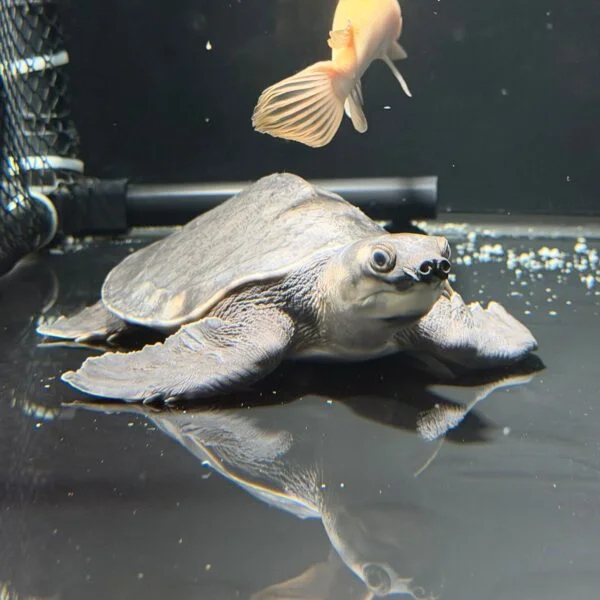
The Fly River Turtle (Carettochelys insculpta), also called the pig-nosed turtle, is one of the most distinctive aquatic turtles you can keep — and at approximately 10 inches, it is a serious long-term commitment rather than a casual pickup. If you are searching for a Fly River Turtle – Approx 10″ in Canada, this listing explains exactly what you receive, how to house it, and what it takes to keep one thriving. This is a true freshwater turtle from New Guinea and northern Australia, instantly recognized by its smooth, paddle-like flippers and fleshy snout, and it behaves far more like a fish than a typical basking turtle.
Before you order, understand the key point: this is not a beginner’s pet and not a tank mate for small fish. The Fly River Turtle is a hardy, long-lived animal with specific needs for warm, clean, well-oxygenated water and a carefully structured diet. Read on for specifications, care requirements, and how ordering live animals works through our Canadian aquarium fish shop online.
What You Are Buying: Fly River Turtle – Approx 10″
Each animal is a juvenile-to-subadult Fly River Turtle measuring approximately 10 inches in shell length (carapace length). At this size, the turtle is past its fragile hatchling stage and is far more resilient, feeding readily and adapting well to a properly cycled aquarium or indoor pond.
Quick Specifications
- Common names: Fly River Turtle, pig-nosed turtle, pitted-shelled turtle
- Scientific name: Carettochelys insculpta
- Size at sale: Approx 10″ carapace length
- Adult size: Can exceed 20″ (50 cm) and 20+ kg in captivity
- Lifespan: Decades — plan for 30+ years
- Origin: Southern New Guinea and the Northern Territory of Australia
- Habitat type: Fully aquatic; freshwater to slightly brackish
- Temperament: Generally gentle and non-aggressive, but predatory toward small fish
- Availability: Captive-bred and licensed imports; verify CITES and provincial legality before purchase
Why Aquarists Choose This Species
The Fly River Turtle combines the presence of a large, personable reptile with the visual appeal of an exotic aquarium fish. Its grey, leathery skin, pale underside, and oar-like front limbs make it a genuine showpiece. Because it rarely basks and instead spends almost all its time submerged, it fits display setups that are designed for viewing through the glass rather than from above.
Housing a Fly River Turtle in a Canadian Home
At 10 inches, this turtle already needs substantial space, and it will only grow. Plan for a tank or indoor pond of at least 6 feet in length as a starting point, with significantly larger accommodation for the adult animal.
Tank Setup Essentials
- Water volume: 150+ gallons minimum for a 10″ specimen; 300+ gallons for adults
- Filtration: Heavy-duty canister or sump filtration — these turtles produce a large bioload
- Temperature: Stable warm water, typically the mid-70s to low-80s °F (roughly 24–29 °C)
- Lighting: Full-spectrum lighting; a basking area is optional since this species seldom leaves the water
- Substrate: Smooth sand or bare-bottom to avoid abrasions on the soft plastron
- Aquascape: Secure decor, as these turtles are strong and will rearrange loose items
- Lid: Critical — this is an accomplished climber and escape artist
Routine partial water changes and rigorous filtration are non-negotiable. Poor water quality is the leading cause of shell and skin problems in captive pig-nosed turtles.
Diet and Feeding
Fly River Turtles are largely omnivorous and lean toward plant matter and fruit as they mature. A balanced captive diet typically includes quality aquatic turtle pellets, leafy greens, and suitable fruits, supplemented with occasional protein such as prawns or fish. Feed in a way that keeps uneaten food out of the water column to protect water quality.
Compatibility and Tank Mates
Because it will eat small fish, a Fly River Turtle belongs in a species-focused or carefully chosen large-fish setup — not a community tank of small tropical fish. Suitable tank mates tend to be large, robust, fast-moving species. If your goal is a mixed display, it is usually wiser to build the tank around the turtle rather than add it to an existing community.
For aquarists also stocking a separate community system, browse our full range of freshwater aquarium Fish Canada online to find species that suit smaller, peaceful tanks.
Ordering Live Aquarium Fish Online in Canada
Buying a live turtle online requires trust in packaging, timing, and transport. We ship with insulated, well-oxygenated packing and coordinate delivery windows so your animal arrives safely and quickly.
What to Expect on Delivery
- Live arrival priority: Animals are packed for the journey and tracked door-to-door
- Delivery windows: Scheduled to avoid extreme heat or cold, which matters across Canadian seasons
- Acclimation: Float and gradually introduce your turtle to tank water before release
- Quarantine: A short observation period in a separate system is good practice before adding to a main display
Serving Buyers Across Canada
Whether you are looking to buy fish online Ontario Canada or anywhere else in the country, ordering through a dedicated Canadian operation shortens transit time and reduces stress on the animal. If you are searching for an aquarium fish shop online that handles livestock responsibly, our team can advise on tank readiness before you commit.
Is a Fly River Turtle Right for You?
This is an expensive, high-commitment animal with a multi-decade lifespan and demanding husbandry. It suits experienced aquarists and reptile keepers with the space, filtration, and budget to do it properly. It is a poor choice for anyone seeking a low-maintenance pet or a beginner’s first turtle.
Also consider legal and ethical factors. The species is protected under CITES, and buyers should confirm the animal’s origin, relevant permits, and any provincial or municipal restrictions in Canada before purchasing. A responsible seller will be transparent about sourcing.
For reference on the species and its conservation status, see the IUCN Red List entry for Carettochelys insculpta and the CITES species database, which document its protected status and trade regulation.
Preparing Before Your Turtle Arrives
Set up and cycle your system in advance. Have filtration running, temperature stable, and water parameters tested before the animal ships. Confirm the tank is secure against climbing and that your household understands the long-term responsibility involved.
If you are still building out your display, you can compare options and pricing through our broader catalogue, and explore trusted external husbandry references such as the Reptile and amphibian care resources at the Smithsonian’s National Zoo for general reptile-keeping principles.
Frequently Asked Questions
How big does a Fly River Turtle get?
Adults can exceed 20 inches in shell length and become very heavy. A 10-inch specimen is still growing, so plan housing for the adult size from day one.
Can a Fly River Turtle live with tropical fish?
Not with small fish — they will be eaten. Only large, robust, fast-moving species should be considered as tank mates, and even then, success depends on the individual turtle.
Do they need a basking area?
They rarely bask, so a traditional dry basking dock is less important than warm, clean, well-oxygenated water and proper lighting.
Is the Fly River Turtle legal to buy in Canada?
It is a CITES-protected species. Confirm the animal’s documentation and check your province’s rules before ordering. A reputable seller will provide sourcing details.
How do you ship live turtles in Canada?
They are packed in insulated, oxygenated containers with tracked delivery timed to avoid temperature extremes. Acclimate gradually and quarantine briefly on arrival.
What is the pet fish price in Canada for this species?
Pricing varies widely with size, origin, and availability, so request a current quote rather than relying on outdated figures.
Be the first to review “Buy Fly River Turtle in Canada”
Related products
Tropical Fish
Tropical Fish
Tropical Fish
Tropical Fish
Tropical Fish
Tropical Fish
Tropical Fish
Tropical Fish
Reviews
There are no reviews yet.