Cuban Gar – Approx 18″ for Sale: A Living Fossil for the Serious Canadian Aquarist
If you are searching for a Cuban Gar – Approx 18″, you are already past the beginner stage of the hobby. This listing offers a large, tank-raised Cuban Gar (Atractosteus tristoechus) at roughly 18 inches, a size that lets you skip the fragile juvenile phase and enjoy a fish with real presence. Canada-wide delivery makes it possible to buy aquarium fish online with confidence, even when the species you want never appears in local stores.
The Cuban Gar is a genuine living fossil. It belongs to the gar family Lepisosteidae, a lineage that has survived since the age of the dinosaurs, and it is the rarest of the living gar species in the wild. In the aquarium trade it is uncommon, striking, and demanding in the right ways. This page explains what you receive, how to house it, and why ordering through Canadian Aquarist makes sense for keepers who take large predatory fish seriously.
Why the Cuban Gar Stands Out Among Exotic Aquarium Fish for Sale
A Living Fossil With Real Presence
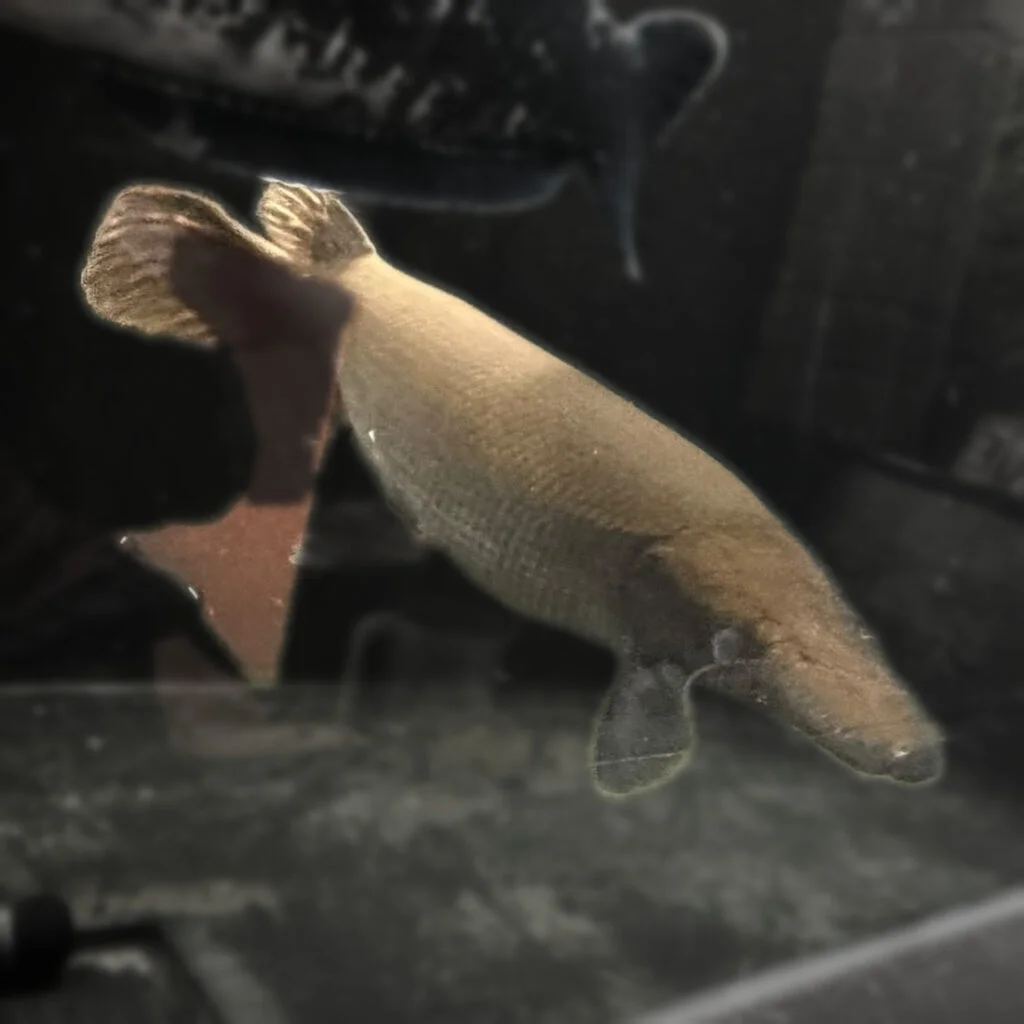
Most exotic aquarium fish for sale are small, colorful, and relatively easy to replace. The Cuban Gar is not. Its elongated, armor-plated body, crocodilian snout, and rows of interlocking ganoid scales give it a prehistoric look that few freshwater species can match.
At 18 inches, this fish is already a centerpiece. Expect it to command attention the moment it enters the tank.
Color and Pattern That Improve With Age
Juveniles show a dark lateral stripe that fades as the fish matures. Adults develop a mottled olive-brown to grey-green body with a lighter belly and subtle spotting along the flanks. Under good lighting, the scales catch an almost enamel-like sheen that photographs beautifully.
Rarely Available Compared to Other Freshwater Fish for Sale
Cuban Gars are endemic to western Cuba, where wild populations are restricted to a handful of river systems and are considered endangered. Legally traded specimens come from captive breeding. That makes each fish available in Canada a genuine event rather than a routine purchase.
What You Receive When You Buy Freshwater Fish Online Here
Specimen Details
- Species: Atractosteus tristoechus (Cuban Gar)
- Approximate size: 18 inches
- Origin: captive-bred stock
- Temperament: predatory, generally peaceful toward fish it cannot swallow
- Water type: freshwater
- Diet: live and frozen carnivore foods
Health and Conditioning
Every fish is held and observed before shipping. You receive an animal that is actively feeding, free of visible disease, and accustomed to aquarium conditions. That conditioning matters far more with gar than with most species, because stressed or malnourished gar rarely recover well.
Canadian Delivery for Live Tropical Fish
Aquarium fish delivery across Canada is handled with insulated packaging and heat or cold packs matched to the season. If you want to buy ornamental fish online without gambling on a long, careless transit, this is the practical route.
How to House a Cuban Gar
Tank Size and Dimensions
Plan on a minimum of 180 gallons for a single adult, and larger if you keep tankmates. Length matters more than volume. An 18-inch gar needs a footprint of at least 6 feet by 2 feet to turn and cruise comfortably.
A tight lid is non-negotiable. Gar are powerful jumpers and will find any gap.
Water Parameters
| Parameter | Target Range |
|---|---|
| Temperature | 22–26°C (72–79°F) |
| pH | 6.5–7.5 |
| Hardness | Soft to moderately hard |
| Filtration | High turnover, strong mechanical stage |
Stable, well-oxygenated water keeps this species thriving. Cuban Gars tolerate a range of conditions but do poorly with fluctuating parameters or accumulated waste.
Tankmates and Compatibility
Choose tankmates that are too large to swallow. Adult silver dollars, large cichlids, bichirs, and big catfish usually work. Anything small enough to fit in that snout will eventually disappear, often overnight.
Avoid aggressive fin-nippers. Ganoid scales protect the body, but the fins remain vulnerable.
Feeding a Large Predatory Gar
Cuban Gars are ambush predators. In the wild they eat fish and crustaceans, and captive specimens do best on a similar diet.
- Live feeders as an occasional treat, quarantined first
- Frozen silversides, prawns, and whole fish
- Vitamin-soaked food to cover nutritional gaps
- Feeding two to three times weekly for adults
Do not overfeed. Adult gar have slow metabolisms compared to typical tropical fish, and obesity shortens their lives.
Cuban Gar vs. Other Gar Species
| Species | Adult Size | Availability in Canada | Notes |
|---|---|---|---|
| Cuban Gar | 3–5 ft | Rare | Endangered, captive-bred only |
| Florida Gar | 2–3 ft | Common | Hardy, adaptable |
| Spotted Gar | 2–3 ft | Occasional | Tolerates warmer water |
| Alligator Gar | 6–8 ft | Very rare | Public aquarium scale only |
If you want the rarest of the group and can commit to the space, the Cuban Gar is the clear choice. If you want a forgiving first gar, a Florida Gar is the easier starting point.
Buying Small Aquarium Fish Online vs. Large Specimens
There is a real trade-off here. Juveniles are cheaper to ship and easier to acclimate, but they are fragile, slow to feed reliably, and years away from full size. An 18-inch specimen arrives as a finished animal.
You skip the risky grow-out phase. You also get to see the fish’s adult proportions, temperament, and feeding response immediately. For keepers who want to buy colorful aquarium fish that will stay impressive, buying a sub-adult or adult is often the smarter spend.
Why Order From Canadian Aquarist
Canadian Aquarist is a specialist aquarium fish shop online built for hobbyists who keep uncommon species. The catalog goes well beyond what chain stores carry, and the team understands the logistics of moving large, delicate fish across Canadian provinces.
Beyond livestock, the shop’s broader catalog covers the equipment that predatory fish actually need: oversized filtration, large-volume tanks, and heating rated for cold Canadian basements. You can also browse additional freshwater species to plan tankmates before your gar arrives, and check current livestock availability when you are ready to commit.
For background on gar biology and conservation status, the IUCN Red List and the Smithsonian National Museum of Natural History maintain useful reference material on the family Lepisosteidae.
Shipping and Acclimation in Canada
What to Expect on Delivery Day
Shipments are packed for the season, with tracking provided. In colder months, heat packs and foam-lined boxes keep water temperature stable. In summer, cold packs prevent overheating in transit.
Acclimating Your Gar Step by Step
- Float the bag in the tank for 20 to 30 minutes to match temperature.
- Add small amounts of tank water to the bag over another 20 minutes.
- Net the fish into the tank. Never pour shipping water into your system.
- Leave lights off for the first 24 hours.
- Offer food after 48 hours.
Gar adapt well to this process when the destination tank is already cycled and stable.
Is the Cuban Gar Right for You?
Buy this fish if you have a large, established tank, a taste for unusual predators, and the patience to manage a long-lived animal responsibly. Cuban Gars can live for decades in captivity, so this is closer to adopting a pet than buying a decoration.
Skip it if your largest tank is under 150 gallons, if you want a community showpiece, or if you are uncomfortable feeding whole prey. There is no shame in choosing a smaller gar or a different predatory species instead.
For the right keeper, few freshwater fish for sale in Canada offer this combination of rarity, history, and sheer presence.
FAQ
How big does a Cuban Gar get?
Adults commonly reach 3 to 5 feet in captivity, with females typically larger than males. An 18-inch specimen still has significant growing to do, so plan for the long term rather than the current size.
What size tank does an 18-inch Cuban Gar need?
A minimum of 180 gallons with a footprint of at least 6 feet by 2 feet. Larger is better, and a wide tank beats a tall one for this species.
Can I keep a Cuban Gar with other fish?
Yes, if the tankmates are too large to swallow. Large cichlids, bichirs, silver dollars, and big catfish are common choices. Anything small enough to fit in the gar’s mouth will eventually be eaten.
What does a Cuban Gar eat?
Live and frozen fish, prawns, and crustaceans. Most captive specimens accept frozen silversides and prawns readily once settled.
Is the Cuban Gar endangered?
Yes. Wild populations are restricted to western Cuba and are considered endangered, which is why legally traded specimens come from captive breeding programs.
Do you ship live fish across Canada?
Yes. Livestock ships Canada-wide with seasonal packaging. Check current availability and shipping terms before ordering.
Be the first to review “Buy Cuban Gar in Canada”
Related products
Tropical Fish
Tropical Fish
Tropical Fish
Tropical Fish
Tropical Fish
Tropical Fish
Tropical Fish
Tropical Fish
Reviews
There are no reviews yet.