Aquarium Blog
Indoor Aquarium Enrichment Canada: How to Create a Healthier, More Engaging Fish Tank
Oct
An indoor aquarium should be more than a glass box with water, equipment, and fish. A well-designed fish tank gives aquatic animals opportunities to explore, rest, forage, hide, and interact with their environment. This approach is known as indoor aquarium enrichment, and it is becoming increasingly important for Canadian aquarists who want attractive displays that also support responsible fishkeeping.
Recent public conversations about aquatic animal welfare have encouraged hobbyists to look more closely at how aquarium environments affect behaviour and wellbeing. While a home freshwater aquarium is very different from a public aquarium or rescue facility, the underlying lesson is useful: the quality of an aquatic environment matters.
For home aquarists, enrichment does not require expensive technology or an elaborate aquascape. It starts with choosing suitable fish, providing appropriate structure, maintaining stable water conditions, and designing the tank around the animals rather than decoration alone.
What Is Indoor Aquarium Enrichment?
Indoor aquarium enrichment means intentionally adding features and routines that encourage natural, healthy behaviour. In a fish tank, this can include plants, caves, driftwood, open swimming areas, gentle water movement, varied feeding methods, and a predictable maintenance schedule.
The goal is not to make fish perform tricks or constantly remain active. Fish also need quiet areas and uninterrupted rest. Good enrichment creates choice: a fish can explore an open area, retreat behind a plant, hover in a current, or search for food among safe surfaces.
Effective enrichment should always be species-appropriate. A planted tank designed for small rasboras will not necessarily suit a territorial cichlid, bottom-dwelling loach, or nocturnal catfish. Before buying aquarium decorations or equipment, consider the natural habits, adult size, swimming level, and social needs of the fish you plan to keep.
Why Enrichment Matters in a Home Aquarium
Fish respond to their surroundings. A bare tank may be easy to clean, but it can offer limited shelter and few visual boundaries. By contrast, a thoughtfully arranged aquarium can help fish establish territories, avoid constant exposure, and behave more naturally.
1. It provides security
Many aquarium fish become stressed when they have nowhere to hide. Caves, dense plants, wood, and shaded areas allow nervous or subordinate fish to withdraw when they feel threatened. This is especially important in community aquariums and tanks placed in busy rooms.
2. It supports natural movement
Different fish prefer different spaces. Surface-dwelling species may need open water near the top, while bottom feeders benefit from clear access to the substrate. Plants and hardscape can create gentle current breaks, pathways, and varied swimming zones.
3. It reduces conflict
In some species, visual barriers can reduce chasing and territorial disputes. A piece of driftwood or a group of tall plants may prevent one fish from seeing across the entire aquarium. This does not make incompatible species suitable tank mates, but it can improve the use of space when stocking is already appropriate.
4. It makes observation more meaningful
An enriched aquarium gives owners more opportunities to notice normal behaviour. You may see fish investigating a new plant, grazing on surfaces, resting beneath leaves, or changing their preferred swimming area throughout the day. These observations can also help identify changes in appetite, activity, or social behaviour.
Build Enrichment Around Fish Behaviour
The best starting point is not a decoration category. It is the behaviour of the fish. Ask what each species does in nature and how those needs can be represented safely in an indoor aquarium.
For schooling fish
Small tetras, rasboras, danios, and similar species usually benefit from open swimming space, gentle flow, and groups large enough to feel secure. Avoid filling the entire front of the tank with ornaments. Instead, create a planted background or side structure while leaving a clear central swimming lane.
For bottom-dwelling fish
Corydoras, loaches, and other bottom-oriented species need usable floor space. Choose smooth aquarium substrate without sharp edges, and avoid covering every section with heavy décor. Low plants, rounded wood, and shaded resting areas can provide useful structure without blocking access to the bottom.
For territorial fish
Territorial species often need defined zones and visual breaks. Caves, rock formations, and upright wood can create separate areas, but the layout must still leave enough room for the fish to swim and turn comfortably. Never rely on decorations to solve severe aggression or an unsuitable stocking plan.
For nocturnal fish
Nocturnal fish require shelter during the day. Caves, overhangs, broad leaves, and shaded wood can help them rest without being exposed to bright aquarium lighting. A gradual lighting schedule may also be less disruptive than switching intense lights on suddenly.
Use Plants as Living Enrichment
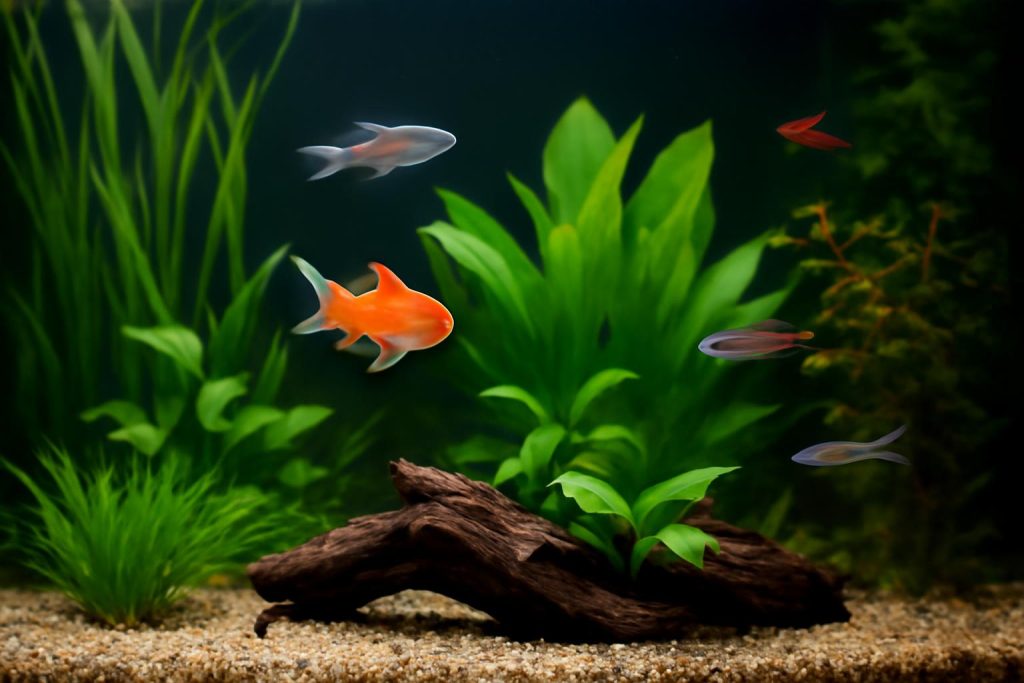
Live plants are among the most useful forms of aquarium enrichment. They offer cover, create visual boundaries, soften water movement, and provide surfaces for grazing and exploration. In a planted freshwater aquarium, plants can also help absorb nutrients and contribute to a more natural appearance.
Choose plants according to light level, water conditions, fish behaviour, and maintenance capacity. Fast-growing stem plants can create dense cover, while anubias, Java fern, and similar hardy choices can be attached to wood or rock. Floating plants may provide shade for fish that prefer subdued light, although they must be managed so they do not block gas exchange or overwhelm the surface.
New plants should be inspected before entering the tank. Remove unwanted snails, damaged leaves, packaging material, and visible debris. When purchasing plants or other equipment, Canadian hobbyists can begin with a dedicated Canadian aquarium store and select products suited to their tank size and livestock.
Add Hardscape With Purpose
Rocks and driftwood should do more than fill empty space. They can create caves, shade, boundaries, and pathways. Arrange hardscape so that it is stable before adding water. Unstable rocks can injure fish or damage the glass if they fall.
Inspect every piece for sharp edges, loose fragments, coatings, or contaminants. Aquarium-safe materials should be cleaned appropriately before use. Avoid collecting rocks or wood from unknown locations unless you understand how to sterilize them and confirm that they will not introduce pollutants or alter water chemistry in an unwanted way.
Leave enough space around hardscape for cleaning and maintenance. A beautiful structure that traps waste behind it can create water-quality problems. Enrichment should improve the aquarium environment, not make routine care impossible.
Make Feeding More Engaging
Feeding is another opportunity for enrichment. Instead of dropping all food in one location, distribute suitable food across the areas where different fish naturally feed. This can reduce competition and encourage controlled exploration.
Bottom-feeding species may benefit from sinking foods placed on an open section of substrate. Herbivorous fish may investigate algae-based foods or safe vegetables, while surface feeders can be offered floating foods in a calm area. Always remove uneaten food and avoid overfeeding.
Do not use enrichment feeders, feeding rings, or complex devices without considering water quality and fish safety. Any object placed in the tank should be aquarium-safe, easy to clean, and impossible for fish to become trapped inside.
Equipment Is Part of the Environment
Filtration, heating, and lighting influence how fish use the aquarium. Equipment should provide stable conditions without creating excessive noise, turbulence, or temperature swings.
Filtration and flow
Filter flow should match the livestock. Some fish enjoy current, while slow-moving species may become exhausted in a strong stream. Use plants, wood, or an adjusted outlet to create areas with different flow levels. Maintaining clean, appropriately sized filtration is more important than simply choosing the most powerful filter.
Canadian aquarists comparing filtration options can review available aquarium filter and equipment categories while considering tank volume, bioload, maintenance requirements, and the needs of the fish.
Heating
Many tropical fish require stable warm water, particularly during Canadian winters when indoor temperatures can fluctuate. Use a reliable aquarium heater with suitable capacity and position it where water movement distributes heat evenly. A thermometer provides an independent way to confirm the actual temperature.
Lighting
Lighting should support plants and allow you to observe fish without creating constant stress. Provide a consistent day-night schedule, and include shaded areas for species that prefer lower light. A timer can help maintain regularity during dark Canadian winter mornings and evenings.
Design for Seasonal Canadian Conditions
Canadian homes present specific aquarium challenges. Winter heating can reduce indoor humidity and increase evaporation. Cold weather can also make transporting livestock and temperature-sensitive products more complicated. During severe weather, avoid unnecessary moves and plan deliveries carefully.
Place the aquarium away from cold drafts, exterior doors, direct heat registers, and windows with strong seasonal sunlight. A stable room location reduces temperature fluctuations and helps prevent algae caused by uncontrolled light.
Power interruptions are another consideration. A battery-operated air pump, spare thermometer, and emergency plan can be valuable during winter storms. For larger aquariums, consider how long the tank can maintain oxygen and temperature if household power fails.
Enrichment Does Not Replace Water Quality
Plants, caves, and attractive layouts cannot compensate for unstable water parameters. Clean water, adequate biological filtration, appropriate stocking, and regular testing remain the foundation of fish welfare.
Test the aquarium during cycling, after adding fish, and whenever behaviour changes. Watch for ammonia, nitrite, nitrate, pH, and temperature patterns that are relevant to your livestock. Perform water changes with conditioned water at a similar temperature, and clean filter media in removed aquarium water rather than chlorinated tap water.
A practical equipment checklist can be built by reviewing the store’s available aquarium products and matching each item to a specific purpose. Avoid buying equipment simply because it is marketed as an upgrade.
Common Indoor Aquarium Enrichment Mistakes
Overcrowding the layout
Too many decorations reduce swimming space and make waste removal difficult. Use a few purposeful structures instead of filling every open area.
Choosing appearance over safety
Sharp ornaments, unstable rocks, small openings, and painted objects can injure fish or affect water quality. Inspect decorations carefully before use.
Changing everything at once
Large sudden changes can stress fish and disturb beneficial bacteria. Add new features gradually, and monitor behaviour and water parameters afterward.
Ignoring species differences
A decoration that suits a small community tank may be unsuitable for a large or territorial fish. Research adult size and behaviour before designing the aquarium.
Frequently Asked Questions
What is the easiest form of aquarium enrichment?
Adding safe cover is one of the simplest improvements. Hardy live plants, smooth driftwood, and appropriately sized caves can give fish places to explore and rest without requiring complex equipment.
Can a small aquarium provide enrichment?
Yes, but space must be planned carefully. A small aquarium should not be used for fish that require large territories or long swimming distances. Choose suitable livestock and prioritize stable water quality, open swimming room, and safe structure.
Do aquarium decorations stress fish?
They can if they are unstable, sharp, toxic, excessively crowded, or introduced too quickly. Safe decorations generally support fish when they provide shelter and do not interfere with movement or maintenance.
How often should enrichment be changed?
There is no need to rearrange a healthy aquarium frequently. Fish often benefit from a stable environment. Make gradual changes only when improving safety, correcting territorial issues, or providing new suitable structure.
Is aquarium enrichment useful for planted tanks?
Yes. A planted aquarium naturally provides visual barriers, cover, grazing surfaces, and varied swimming zones. Combine plants with open areas and stable hardscape so the tank remains functional as well as attractive.
A Better Standard for the Indoor Aquarium
Indoor aquarium enrichment is a practical way to connect good design with responsible fishkeeping. The most successful aquarium is not necessarily the one with the most expensive equipment or the greatest number of decorations. It is the one that gives its inhabitants stable water, suitable shelter, appropriate movement, and opportunities to behave naturally.
For Canadian aquarists, thoughtful planning also means accounting for winter temperatures, power interruptions, shipping conditions, and the realities of indoor spaces. Start with the needs of the fish, choose dependable aquarium supplies, and make every feature serve a clear purpose. The result will be a healthier, more engaging indoor aquarium that is rewarding to observe throughout the year.
